THE GLOW FADES.
THE DAMAGE DOESN'T.
A tan is your skin responding to ultraviolet injury. No shame. No scare tactics. Just the science — and what it would take to actually protect people from it.
02 / Damage
The surface was never the barrier.
Commercial units are UVA-dominant by design: UVA drives the pigment darkening that reads as a tan, with less of the stinging erythema that would make a customer stop coming back. Longer wavelengths travel further before they're absorbed.
UVB absorbed at the epidermisUVA travels on into the dermis
Stratum corneum. Dead keratinised cells, roughly a fifth the width of a human hair. It absorbs some incident UVB. It does not stop UVA.
Epidermis. Where UVB ends — but not before landing on the dividing keratinocytes and melanocytes that become carcinoma and melanoma.
Dermis. UVA keeps going, generating reactive oxygen species and indirect DNA damage well below the layer a sunburn would have warned you about.
Relative risk of melanoma, by how the exposure is measured
Highest tertile of cumulative sessions: RR 1.32 (1.08–1.63), Ghiasvand et al., Am J Epidemiol 2017. First use before 35: RR 1.59 (1.36–1.85), Boniol et al., BMJ 2012, corrected 2012.
The skin remembers all the sun it ever sees.
Single-cell sequencing of melanocytes from long-term indoor tanners found close to twice the mutation burden of matched controls — including at body sites that stay covered and never see outdoor sun.
Your risk
Where you sit in the data.
Two questions, and the study that answers them
03 / Myth
You've heard the myths.
Tap any one. Here's something you may not have been told — not a lecture.
03 / Dependence
“I could stop
any time.”
For many people that is true. For some it is not — and the reason is pharmacological, not a failure of willpower. Ultraviolet light acts on the same receptors as morphine.
Ultraviolet light striking the skin drives keratinocytes to produce beta-endorphin — one of the body’s own opioids — which then enters the bloodstream. It acts on the same receptor system that morphine acts on.
In mice exposed to UV daily, blood beta-endorphin rose within the first week and stayed elevated across six weeks. Their pain threshold went up — a classic opioid effect — and blocking opioid receptors with naloxone removed it.
Those same UV-exposed mice, given naloxone, showed physical withdrawal signs: paw tremor and teeth chattering. Mice genetically unable to make beta-endorphin showed none of it. Dependence is defined by what happens on removal, and this is what happened.
In a randomised controlled trial of sixteen people — eight frequent tanners, eight infrequent — opioid blockade with naltrexone reduced frequent tanners’ preference for the UV bed, and four of the eight reported nausea or jitteriness consistent with mild opiate withdrawal. None of the infrequent tanners did. Sixteen people is a small study. It is a signal, not a settled fact.
What this does and does not mean
The mechanistic work is in mice. The human trial had sixteen participants, and whether frequent tanning meets the formal definition of an addiction is still argued in the literature. What the evidence does support is narrower and still matters: ultraviolet exposure engages the body’s own opioid system, and in at least some frequent users, blocking that system produces withdrawal-like symptoms. That is a reason to build prevention around access rather than around willpower — and a reason not to treat a teenager who cannot stop as simply careless.
Fell GL, Robinson KC, Mao J, Woolf CJ, Fisher DE. Skin β-endorphin mediates addiction to UV light. Cell 2014;157(7):1527–34. PMID 24949966. · Kaur M, Liguori A, Fleischer AB Jr, Feldman SR, et al. Induction of withdrawal-like symptoms in a small randomized, controlled trial of opioid blockade in frequent tanners. J Am Acad Dermatol, April 2006. PMID 16546596. · Disclosure: David E. Fisher, senior author of the Cell study, is a member of this Working Group.
04 / Business
If we know what UV does,
why are we still selling it?
Because the pitch and the product are two different things.
This is bigger than individual choice.
What people choose is shaped by what businesses sell, what culture rewards, what advertising promises, and what regulation allows. Public-health researchers call these the commercial determinants of health.
05 / Rules
Your zip code
shouldn't decide your protection.
But the rules change at the state line.
Hover or tap a state.
Teal states have a youth-access restriction on the books. Grey states have none we could find in state law. There is no federal age limit to fall back on: the FDA's 2014 rule requires a contraindication on the label, not an enforced age restriction, and the 2015 proposal that would have set one was withdrawn in March 2026. That is why the state line is the boundary that matters. Full state-by-state sourcing and the other five tracked categories →
Salons that broke their own state's youth-access rule
Williams MS, Buhalog B, Blumenthal L, Stratman EJ. JAMA Dermatol 2018;154(1):67–72. A law on the books and a law that is followed are two different things.
IARC classifies ultraviolet-emitting tanning devices Group 1, carcinogenic to humans.
Meta-analyses quantify melanoma, squamous cell and basal cell risk, including the age-of-first-use gradient.
FDA reclassifies sunlamp products to Class II and requires a contraindication against use by people under 18.
FDA proposes a rule restricting indoor tanning to adults, with facility requirements.
Single-cell sequencing shows indoor tanners carry roughly twice the melanocyte mutation burden, including at sun-protected sites.
On 16 March, FDA withdraws the 2015 proposed rule. No federal age restriction takes its place.
The science did not change.
The regulatory response did.
Members of this Working Group made that argument in Nature: classifying a carcinogen is not the same as protecting people from it. Read the correspondence →
How a withdrawn federal rule changes what happens in your state
The FDA regulates sunlamps as devices, not as businesses. In 2014 it moved them to Class II and required the label to carry a contraindication against use by anyone under 18. A contraindication is a warning printed on a machine. It is not a rule about who may get into it, and no salon loses a licence for ignoring it.
The proposed rule would have set a national floor: no one under 18 anywhere in the United States, signed risk acknowledgements, and requirements on the facilities themselves. A federal floor takes effect in every state at once — including the states that have never passed a tanning law of their own.
There is now no federal age limit. The only enforceable age restrictions in the United States are the ones individual states have written for themselves. In a state with none, there is no age restriction at all — a 15-year-old can walk into a commercial salon and legally use a sunbed.
It repeals no state law. Every existing state restriction still stands, and the 2014 device classification and its label contraindication remain in force. What is gone is the floor beneath them — and the pressure a pending federal rule places on state legislatures that have not acted.
An important distinction
None of this concerns medically supervised phototherapy. Narrowband UVB and PUVA are prescribed treatments with defined indications, dosimetry and cumulative-dose monitoring — their risks are quantified rather than absent. Nothing here would restrict access to dermatologic care.
05 / World
Other countries
did not wait.
The United States is not the only country that had to decide what to do about a Group 1 carcinogen sold on the high street. Several decided years ago. Here is what they did, and what is and is not yet known about the result.
Brazil’s health regulator prohibited the use and the commercial sale of artificial tanning equipment for cosmetic purposes, nationwide, in the same year the World Health Organization’s cancer agency classified the devices as carcinogenic to humans.
ANVISA Resolution RDC 56/2009, 9 November 2009.
Commercial solaria were banned in every state and territory from 1 January 2015, except Western Australia, which followed on 1 January 2016. The Northern Territory had no commercial solaria to ban. It remains the only country with a comprehensive ban on commercial tanning beds.
Cancer Council Australia, National Cancer Prevention Policy. · Diehl K, Lindwedel KS, Mathes S, Görig T, Gefeller O. Children 2022;9(6):768.
Australian modelling before the ban attributed roughly 281 melanomas, 43 melanoma deaths and 2,572 squamous cell carcinomas each year to solarium use, at a health-system cost of about three million dollars a year.
Gordon LG, et al. What impact would effective solarium regulation have in Australia? Med J Aust 2008. PMID 18837680.
Following 6.95 million Australians who were aged 12 to 35 in 2007 across the rest of their lives, a later analysis projected 31,009 fewer melanomas, 3,017 fewer melanoma deaths, 468,249 fewer keratinocyte cancers, and more than 580 million dollars saved. These are modelled projections over a lifetime, not cases that have been counted.
Gordon LG, et al. Health Policy 2020. Summarised by ARPANSA, the Australian Radiation Protection and Nuclear Safety Agency.
Twenty-five European countries restrict sunbed use by people under 18, as do New Zealand and most Canadian provinces. Almost every wealthy country has decided that minors should not have access. The disagreement is about adults, not about children.
Diehl K, Lindwedel KS, Mathes S, Görig T, Gefeller O. Tanning bed legislation for minors: a comprehensive international comparison. Children 2022;9(6):768.
Melanoma is a slow disease, and the bans are recent. Melanoma incidence in younger Australians has been falling, but the researchers who examined that decline attribute it mainly to decades of sun-protection campaigns and to changes in the composition of the population; they note that changes in sunbed use, including the commercial ban, may also have contributed, without assigning it a share. A ban is a defensible policy on the evidence of harm. It is not yet a demonstrated fall in melanoma, and this site will not claim that it is.
Cust AE, Scolyer RA, Long GV. What is behind the declining incidence of melanoma in younger Australians? Med J Aust 2024;221(5):246–7.
Across the United States, Europe and Australia, the World Health Organization estimates that sunbed use causes more than 450,000 non-melanoma skin cancers and more than 10,000 melanomas every year. WHO, Artificial tanning devices: public health interventions to manage sunbeds, 2017.
We already know enough
to do better.
From evidence to protection.
06 / Science
What serious prevention looks like.
Modelled US skin-cancer cases attributed to indoor tanning each year
A modelled attributable estimate, not a case count. Wehner MR, Chren MM, Nameth D, et al. JAMA Dermatology 2014;150(4):390–400.
Protect minors.
The default should be protection — not perfect decision-making from a 15-year-old facing a persuasive commercial pitch.
Explore the policy →Regulate exposure.
A commercial site delivering a Group 1 carcinogenic exposure deserves meaningful oversight — the same category as tobacco and asbestos.
Explore the policy →Stop misleading claims.
Safety, wellness, and medical-benefit claims made by a commercial exposure product should be accountable to the evidence.
Explore the policy →Measure whether policy works.
Prevention needs outcomes, not announcements. Age-restriction laws measurably lower prevalence; parental-permission laws, on their own, do not.
Full evidence library →07 / Change
Built by people
who know the skin.




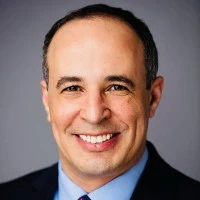




Listed alphabetically by surname. Members are listed as authors of the Working Group's manuscripts. TanPrevent is not an incorporated organization, and no institutional affiliation should be read as an endorsement of this site or its positions. Full profiles →
THE TAN IS TEMPORARY.
PREVENTION SHOULDN'T BE.
The science is established. What happens next is something we can change.
Sunless alternatives and their risks · Monthly evidence updates
Monthly evidence updates
Keep up with the evidence.
A monthly digest of new research on indoor tanning and skin cancer prevention, with sources and study limitations.
Request a subscription by email →
This opens your email app. Send the request to hosseina@wustl.edu; the team will confirm your subscription by email. Enrollment is handled manually. To unsubscribe, email the team with “Unsubscribe” in the subject. Your address will be used to manage and send the updates you request.